
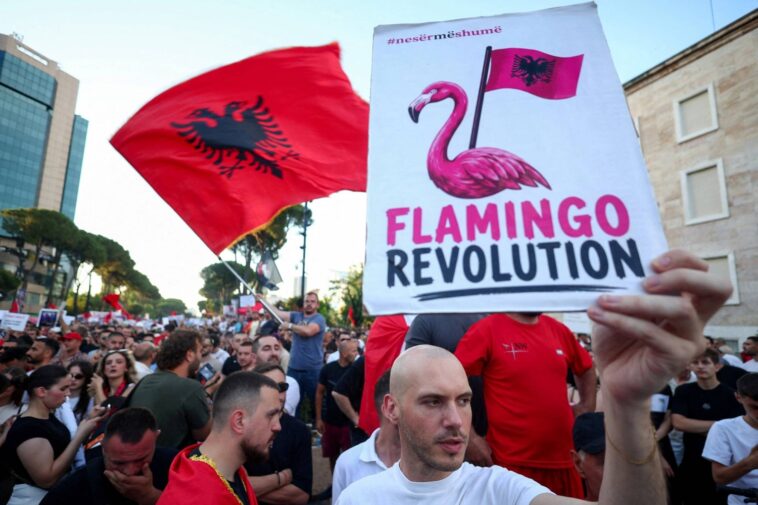
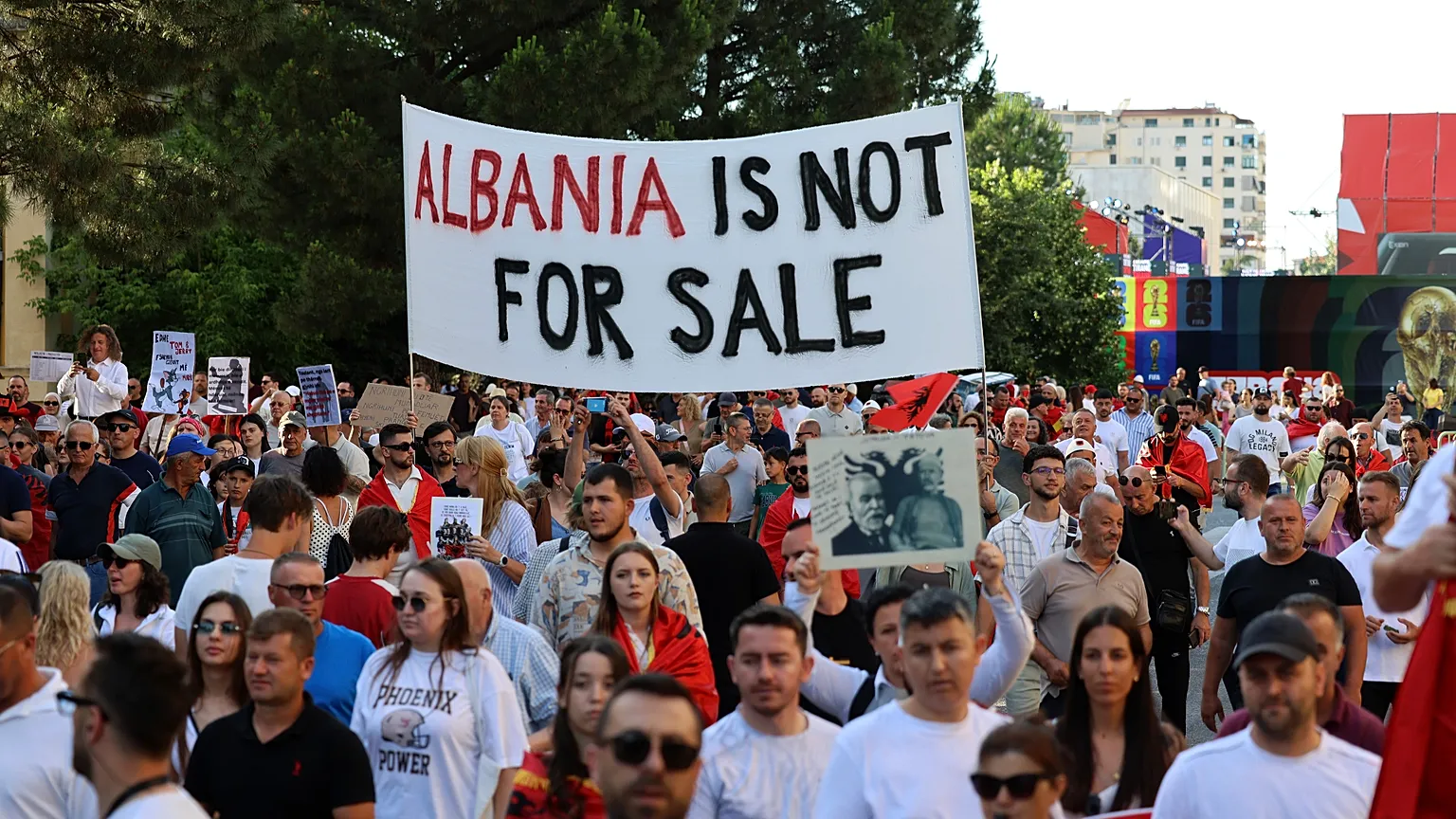
For nearly a month, thousands of Albanians have gathered in Tirana and other cities across the country in what has become one of the longest-running civic demonstrations in recent years.
Nicknamed “The Flamingo Revolution,” the movement began as a series of environmental protests but gradually expanded into a broader civic movement addressing governance, public institutions, environmental protection, and political reform.
Unlike traditional political rallies, participants describe the demonstrations as grassroots and decentralized, with no single leader representing the movement. People from different generations and professions have taken part, while similar solidarity gatherings have also been organized by Albanian communities abroad.
So what are the protesters asking for?
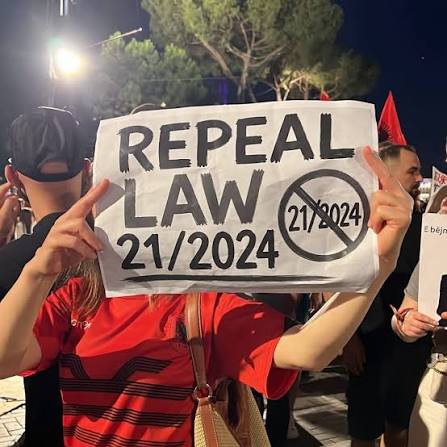
1. Repeal of Law No. 21/2024
The protesters’ primary demand is the repeal of Law No. 21/2024, which amended Albania’s legislation concerning protected areas.
Environmental organizations and many participants argue that the law opens the way for large-scale tourism and commercial developments within protected natural areas. They say the amendments could weaken environmental safeguards and put sensitive ecosystems at risk.
The Albanian government has defended the legislation, arguing that economic development and environmental protection can coexist under the legal framework.
2. Repeal of the “Mountain Package”
A second environmental demand concerns the repeal of the “Mountain Package” (“Paketa e Maleve”).
Protesters argue that the legislation could facilitate private investment and development projects in mountainous regions in ways they believe may affect public land and local communities. Supporters of the legislation, however, argue that it is intended to encourage investment and economic opportunities in underdeveloped mountain areas.
How to Approach Protests in Albania as a Tourist: A Friendly Guide
3. Resignation of the Current Government
Among the movement’s political demands is the resignation of the current Prime Minister and government.
Participants argue that new leadership is necessary to restore public trust and address concerns related to governance and accountability.
Government officials have rejected calls to resign and maintain that they continue to govern with a democratic mandate.
4. Creation of a Transitional Technical Government
Protest organizers have also proposed establishing a non-partisan transitional technical government with a mandate of approximately twelve months.
According to the proposal, such a government would oversee state administration while preparing the country for new elections and institutional reforms.
Whether such a solution is constitutionally or politically feasible remains a subject of public debate.
5. Constitutional and Electoral Reform
Another major demand focuses on institutional reform.
Among the proposals presented by protesters are:
- amendments to Albania’s Constitution through a national referendum;
- revision of the Electoral Code;
- reform of the rules governing political party and organizational financing;
- limiting the office of Prime Minister to a maximum of two lifetime terms, whether full or partial.
Supporters of these proposals argue they would strengthen democratic institutions and accountability, while any constitutional changes would require legal and political procedures established by Albanian law.
6. Repeal of Additional Legislation
The movement also calls for repealing several legal changes that protesters believe are contrary to the public interest.
These include:
- amendments concerning Protected Areas;
- amendments to the Cultural Heritage Law;
- the Mountain Package;
- the legal framework governing Strategic Investments.
Participants argue that these measures should be reconsidered to ensure stronger protection of public assets, cultural heritage, and the environment.
Government representatives have generally defended these policies as instruments for investment and development.
7. A New Social Contract
Perhaps the movement’s broadest proposal is the creation of a new social contract between citizens and the Albanian state.
According to protest organizers, this document would be drafted through consultations involving academics, technical experts, and non-partisan citizens rather than political parties. The proposal envisions a long-term framework aimed at strengthening trust between public institutions and society.
Why Are Albania’s 2026 Demonstrations Called the “Flamingo Revolution”?
Why the Name “Flamingo Revolution”?
The movement’s name comes from the Narta Lagoon, one of Albania’s most important wetlands and home to thousands of flamingos during migration seasons.
The flamingo became a symbol after Albanian journalist Gjergj Erebara suggested calling the demonstrations the “Flamingo Revolution” on social media. The idea quickly spread, inspiring artwork, banners, and visual symbols used during the protests.
For many participants, the flamingo represents both Albania’s natural heritage and the collective character of the demonstrations: many individuals moving together without a single leader.
Looking Ahead
As the demonstrations continue, it remains unclear how the movement will evolve or whether its demands will lead to legislative or political changes.
Regardless of differing political views, the protests have become a significant event in Albania’s recent public life, highlighting debates about environmental protection, governance, democratic institutions, and the relationship between citizens and the state.
Whether remembered primarily as an environmental movement, a civic awakening, or a broader call for institutional reform, the Flamingo Revolution has already become one of the defining public stories of Albania in 2026.