
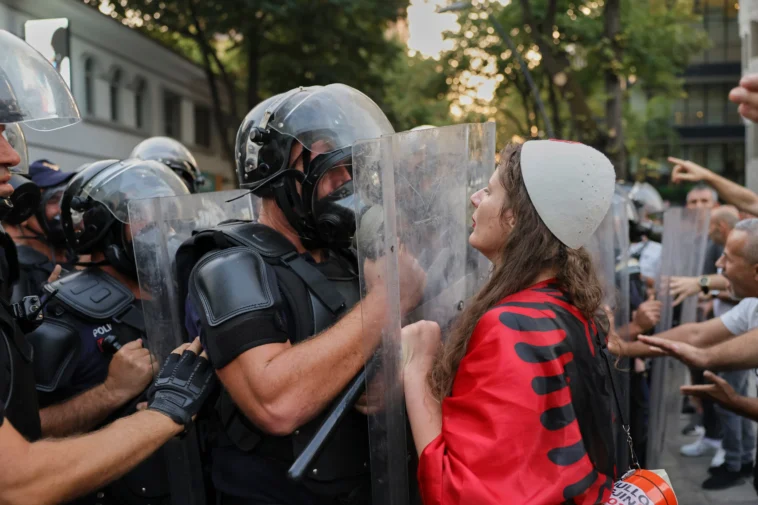
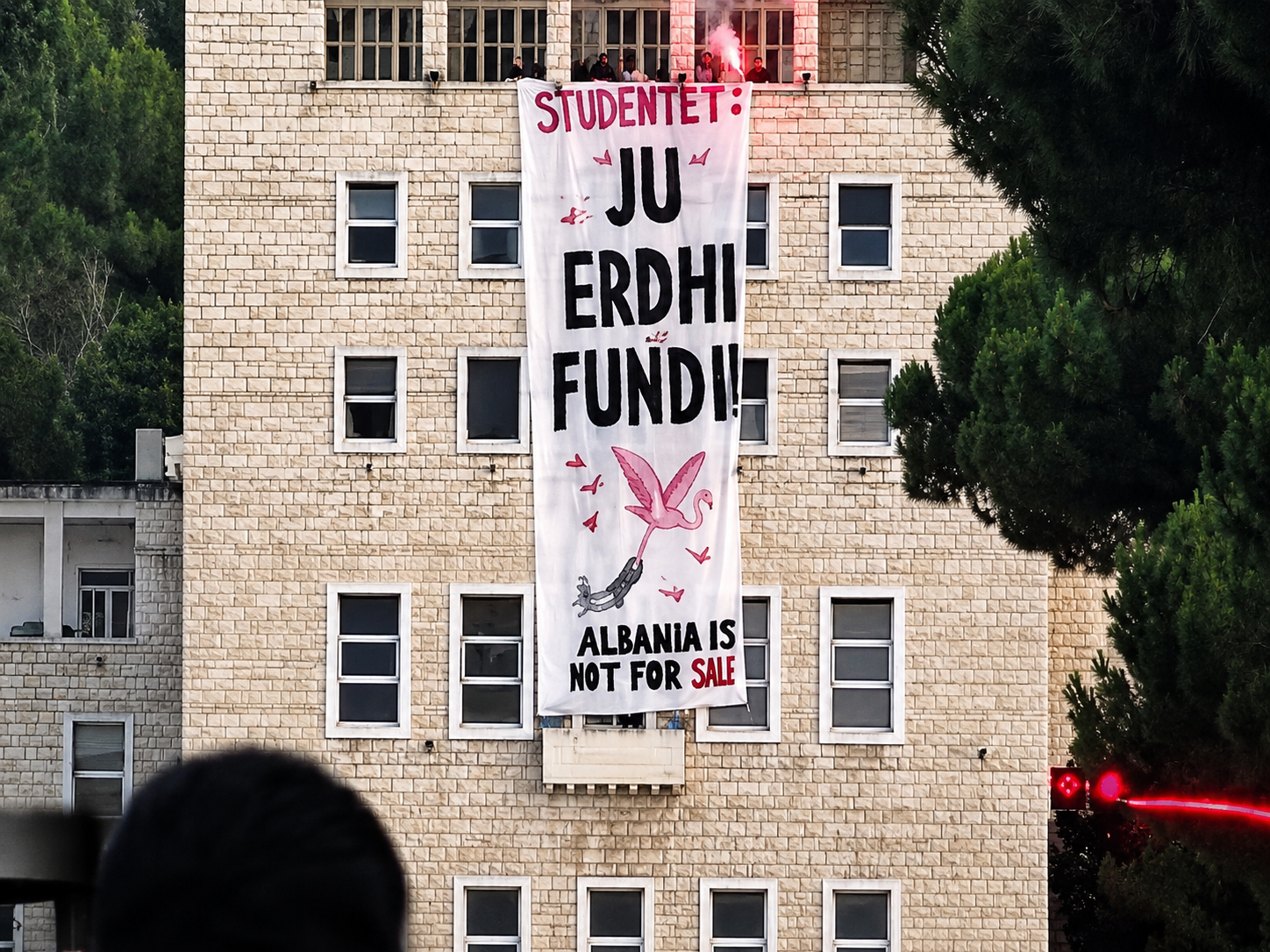
One hundred days of protest. One hundred evenings in the streets. Arrests and detentions, international headlines, flamingos becoming a symbol of resistance, and a movement that began over a protected landscape turning into a much broader challenge to the way Albania is governed.
Yet after 100 days, perhaps the most important question is also the simplest:
What has actually changed?
The answer is uncomfortable. Albania is certainly not the same country politically that it was before the protests began. The government is under greater public scrutiny, institutions are suddenly announcing initiatives aimed directly at citizens, and the protests have reached international media.
But when it comes to the fundamental demands of the movement, the system itself has barely moved.
1. Rama has not backed down
Prime Minister Edi Rama remains in office and continues to defend the controversial investment that helped ignite the protests. The Zvërnec project has not been cancelled, the Protected Areas Law remains in force, and the principal political demands made by protesters have not been fulfilled.
Perhaps this is the clearest result after 100 days: despite unprecedented daily civic pressure, there has been no political retreat at the top of government.
Nor has the protest yet produced the kind of high-level political accountability its participants have demanded.
2. No political earthquake inside the government
The movement has repeatedly raised questions about accountability, corruption and the functioning of state institutions. Yet 100 days later there has been no broad government purge, no collapse of the cabinet and no wave of senior officials losing their positions as a consequence of the protests.
That matters because street mobilisation and political consequences are two different things.
A movement can fill a boulevard every evening and still face institutions capable of absorbing enormous public pressure without fundamentally changing.
That may be one of the biggest lessons of these 100 days.
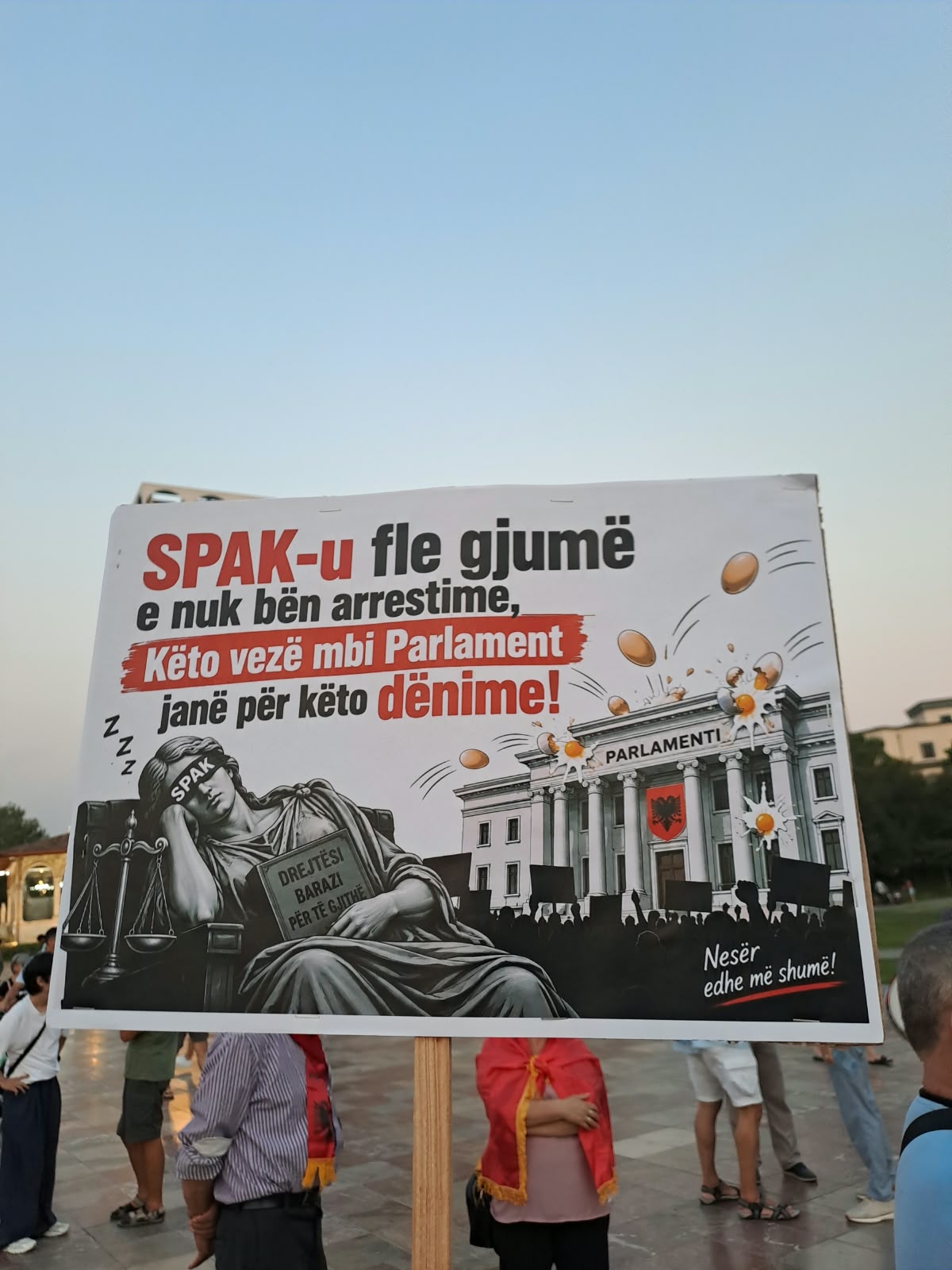
3. Meanwhile, the state suddenly wants to come “door to door”
Something else is changing, however: the way institutions are communicating with citizens.
On September 9, the State Cadastre Agency announced a new approach for homes without property documentation. Mobile teams will begin in villages and later expand into urban areas, with officials describing the policy quite literally as “Kadastra shkon derë më derë” — “the Cadastre goes door to door.”
On its own, this does not prove that the initiative was caused by the protests.
But politically, the timing is difficult to ignore.
After three months in which thousands of citizens have accused institutions of being distant, unresponsive and inaccessible, government agencies are increasingly presenting themselves as institutions that will go directly to citizens rather than making citizens chase the state.
The real test will be whether these announcements translate into measurable results.
4. The battle has moved from the boulevard to the algorithm
The Flamingo Revolution is not happening only in the streets. Increasingly, it is also a battle over who controls what Albanians see online.
In early September, dozens of Instagram accounts associated with activists, opposition figures and pages covering the protests were simultaneously suspended or restricted. One political figure claimed that more than 200 pages publishing protest-related material may have been affected, although that figure has not been independently established as 200 confirmed closures.
Meta subsequently acknowledged that some accounts had been removed by mistake, restored some of them and said it was reviewing what happened. There is currently no publicly established evidence proving that the Albanian government ordered or financed the suspensions.
That distinction matters.
But so does what happened: a large number of voices connected with one of Albania’s biggest protest movements suddenly disappeared or were restricted from one of the country’s most important communication platforms.
After 100 days, the algorithm itself has become part of the political story.
5. Protesters have paid a personal price
The protests have not been without consequences for the people participating in them.
Police have repeatedly detained demonstrators during confrontations. Most recently, AP reported several protesters being detained as demonstrations reached Parliament following the movement’s 100th day.
But there are more troubling individual cases.
Citizens.al reported that a citizen filming a police intervention during the September 1 demonstration outside Police Station No. 3 was arrested and spent approximately 72 hours in detention.
Cases like this shift the debate beyond whether protesters and police clash during demonstrations.
They raise a much more fundamental question:
How much space does an ordinary citizen have to document the actions of the state?
6. Europe is watching — but protesters expected much more
The Flamingo Revolution has succeeded in internationalising issues that previously might have remained largely domestic.
International media including AP, DW and Le Monde have covered the movement.
But international attention is not the same thing as international pressure.
For many protesters, that distinction has become increasingly frustrating. Albania is an EU candidate country, yet after 100 days the government remains firmly in place and the disputed development has not been stopped.
The movement therefore poses an uncomfortable question not only for Tirana but also for Brussels:
How much weight should democracy, environmental protection and institutional accountability actually carry during Albania’s European integration process?

7. Albania is suddenly “No. 1 in the world” for cybersecurity
Then came one of the stranger contrasts of the summer.
The National Cyber Security Index, produced by Estonia’s e-Governance Academy, ranked Albania first in the world for cybersecurity preparedness, with 98.33 points out of 100.
The Albanian National Authority for Cyber Security understandably celebrated the result.
But the headline needs context.
The NCSI evaluates 49 indicators covering areas including cybersecurity legislation, institutions, strategies, critical-infrastructure protection, incident response and international cooperation. It therefore measures a country’s national cybersecurity capacity and preparedness according to its methodology, rather than proving that citizens experience the world’s most secure digital environment.
That difference becomes particularly relevant at a moment when Albanian activists are simultaneously asking how dozens of their social-media accounts could disappear almost overnight.
So, after 100 days, what changed?
The government has not fallen.
Rama has not backed down.
The disputed project has not been cancelled.
There has been no sweeping political accountability inside government.
Protesters have been detained, and at least one documented case involved a citizen who was filming a police intervention.
Dozens of activist-linked Instagram accounts were restricted or closed, while claims suggest the disruption may have reached more than 200 pages; Meta has admitted that at least some removals were erroneous.
At the same time, institutions are visibly moving. New citizen-facing initiatives are appearing. The Cadastre is promising to go door to door. Albania’s international image is receiving greater scrutiny. And a protest that could have disappeared after one week has instead survived for 100 consecutive days, becoming what Citizens.al describes as the longest protest of this magnitude recorded in Albania.
Perhaps that is the contradiction of the Flamingo Revolution after 100 days.
It has changed the conversation far more than it has changed the government.
And now comes the harder test.
Can 100 days of civic pressure eventually force institutional change — or will Albania’s political system simply learn how to live with the protest?